Treadle Lightly explained
It is estimated by earth.org 10 Concerning Fast Fashion Waste Statistics | Earth.Org that 92 million tonnes of garments ends up in landfill each year.
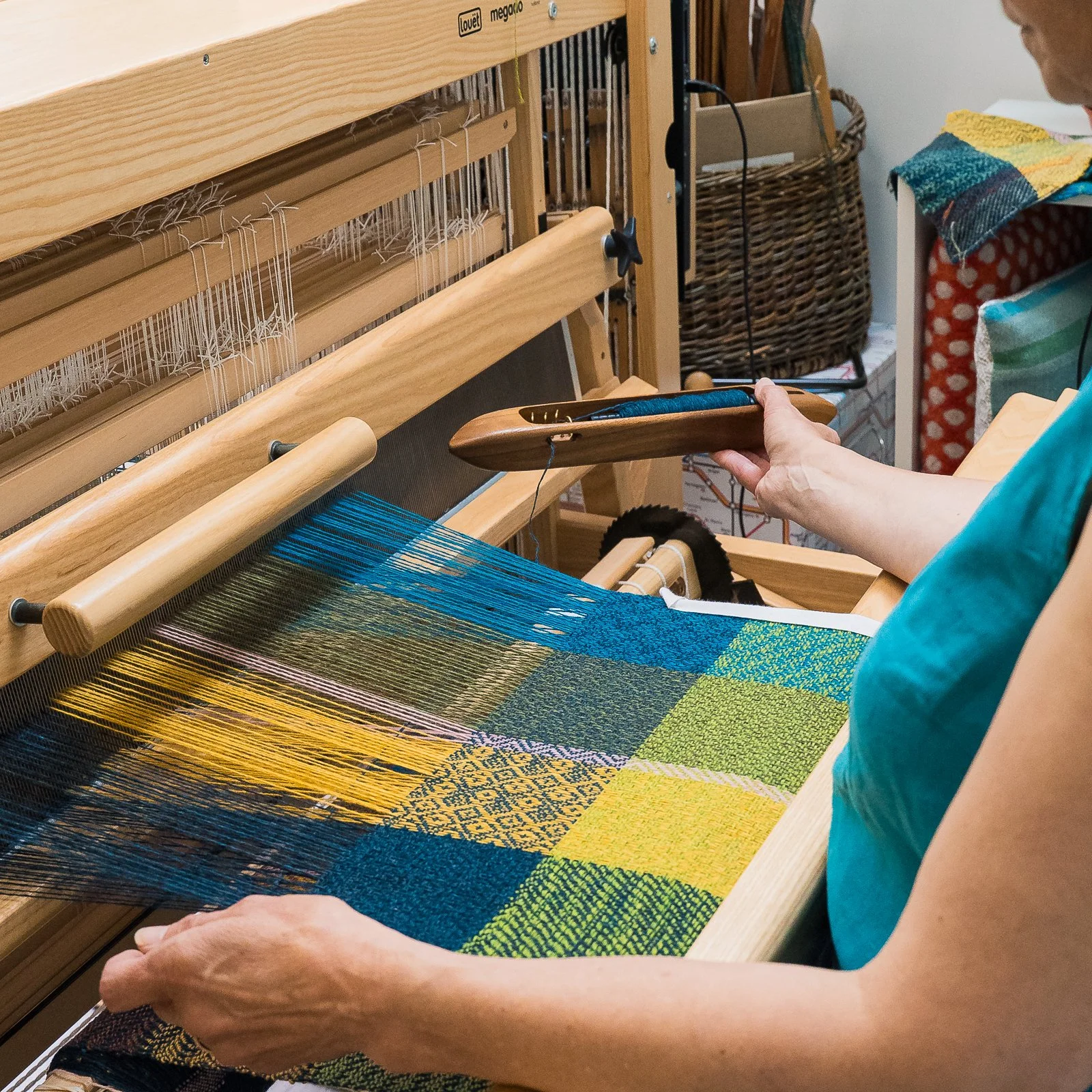
Celebrating slow textiles is a central theme for my practice. I aim to have minimal impact on our precious planet, minimal waste in sourcing materials in the making process and a recyclable end product. This approach will have an overall low carbon footprint, a practice which the environmental movement might describe as ‘Tread Lightly on the earth’’. I care about the environment and I care about the needs of my customers, hence my working name - Treadle Lightly.
This reflects the philosophy of my approach to the craft of handweaving and something I aspire to in life generally. Tread Lightly literally refers to walking gently without making noise or making a disturbance and in this context it was first used by Shakespeare in Macbeth Act III Scene I: “Tread lightly, then, for now, the king comes forth…….”
Tread Lightly is also the name of a US based nonprofit company founded in 1990 focussed on promoting responsible outdoor recreation, with a UK based offspring was established more recently. My adoption of the slightly more nuanced Treadle Lightly relates the philosophy to my own craft practice, attempting to raise awareness of the cost of fast fashion, promoting the fibreshed philosophy of improving the condition of the land from which the fibres I use have been produced, and reducing the impact of both my own practice and the purchase habits of those acquiring any of my work. Encouraging the adoption of mindful consumption.
The phrase Tread Lightly was adopted by the environmental movement as a philosophy promoting a balance between personal choice and environmental conservation. The tread lightly mindset emphasizes awareness, responsibility and balance in all interactions with the environment. Considering the impact of your action on the planet and others by engaging in sustainable practices, such as reducing waste, using reusable items and conserving the planets precious resources.
The philosophy has its roots in indigenous wisdom and promotes long-term sustainability by ensuring that our actions do not disrupt ecosystems or communities while maximising positive impact, enabling us to live within our planets ecological limits.
“Start small, stay curious and let this philosophy guide you towards a life that is lighter on the planet.”
For the future I aim to use weaving yarns produced from fibres grown and raised nearer my home. I am experimenting with creating my own yarns this year. I acquired fleece that would otherwise have no value, and in discussion with a mini-mill this will become a yarn I will use to weave useable textiles.
My approach has been influenced by the US based Fibreshed movement. This non-profit organisation is developing regional soil-to-soil fibre systems which minimise waste and help improve the natural resources required to produce the yarn.
The fibreshed ethos considers the whole system in which fibres, textiles and garments are not only produced, but also how they worn and how they are disposed of.
The essence of fibreshed can be distilled into four clear points:
Wear natural fibres
Avoid plastic fibres
Choose quality over quantity
Keep clothing in use
Find out more at Home - Fibershed and for fibreshed in the UK see Home • South West England Furbished