What is ‘slow textiles’?
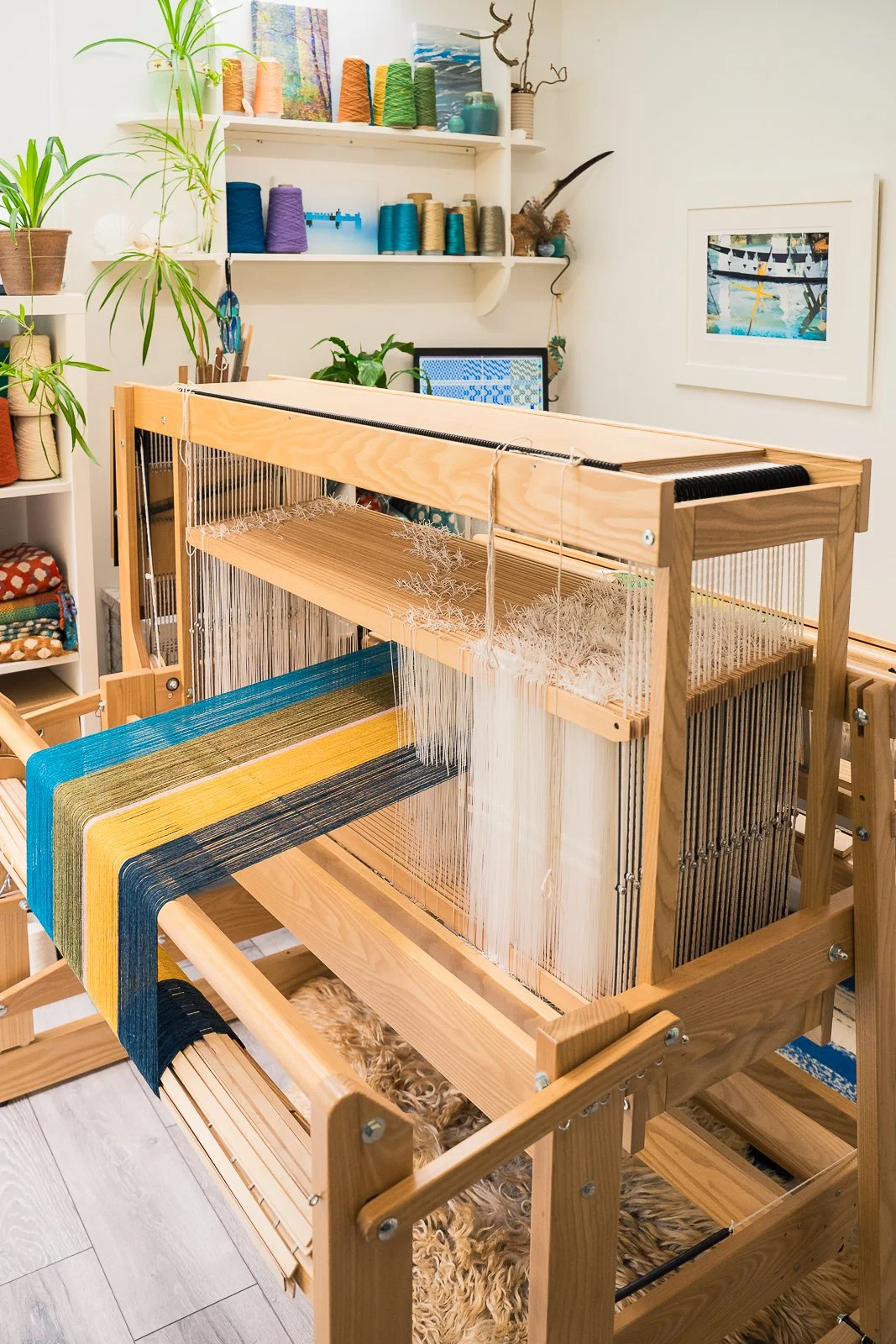
Producing cloth {before the era of large scale manufacturing} was a slow process. In our modern world of fast fashion we have lost sight of this. To produce cloth the fibre must first be grown, whether on a sheeps back or in a field of flax, a full growing season is required. After harvest the fibre is prepared for the next stage of the process, sheep need to be gathered in and sheared. The fleece will be scoured, washed and the full process required to get the fibre ready to create a spun yarn gone through. When the spun yarn is ready, the warp will be wound, the loom dressed and many pirns wound to feed the bobbin with the weft yarn. The textile design is created or interpreted by the weaver to create a final textile. Each step of this process takes the knowledge and skill of a craftsman.
Once the textile is woven, it has to be finished by washing, drying, stretching on tenterhooks and finally dressing the surface before a skilled tailor or seamstress takes the textile to the final stage for the wearer to dress to impress. It’s not just handwoven textiles that have to go through this process, every single item of clothing you are currently wearing will have gone through most of these processes in some way. From harvesting the oil, through the chemical reaction to create a fibre and then to adopt mindful consumption.
Slow textiles are the antithesis of fast fashion. We have become used to a fashion system where new styles of clothes are introduced on a regular basis, sometimes as frequently as daily. This creates a constant flow of low quality clothing made from fibres derived from fossil fuels and which are not biodegradable. This inexpensive, low-quality clothing is quickly discarded to become landfill. Fast fashion has a significant environmental effect both during and after production.
The phrase Tread Lightly was adopted by the environmental movement as a philosophy promoting a balance between personal choice and environmental conservation. The tread lightly mindset emphasizes awareness, responsibility and balance in all interactions with the environment. Considering the impact of your action on the planet and others by engaging in sustainable practices, such as reducing waste, using reusable items and conserving the planets precious resources.
The philosophy has its roots in indigenous wisdom and promotes long-term sustainability by ensuring that our actions do not disrupt ecosystems or communities while maximising positive impact, enabling us to live within our planets ecological limits.
“Start small, stay curious and let this philosophy guide you towards a life that is lighter on the planet.”
For the future I aim to use more weaving yarns produced locally. I am experimenting with creating my own yarns this year in discussion with a mini-mill having acquired fleece that would otherwise have no value.
I am working to produce my own colour palette using natural dye extracts.